
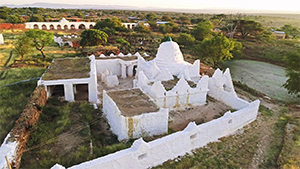
Ethiopia is a land of extraordinary natural beauty and ancient civilizations. Among its most remarkable treasures are the cultural and historical sites created by early societies, many of which continue to inspire awe and devotion today. One such extraordinary destination is Dirre Sheikh Hussein, one of the most important Islamic heritage and pilgrimage sites in Ethiopia and the Horn of Africa.
Location & Significance: Dirre Sheikh Hussein is located in the Bale Mountains of southeastern Ethiopia, set within a dramatic and scenic highland landscape. Dating back to the 12th century, the site has long served as a major Islamic center of pilgrimage, attracting devotees from across Ethiopia as well as from the wider Horn of Africa and the Middle East.
Historical & Religious Background: The shrine is named after Sheikh Nur Husein bin Malka, locally known as Sheikhana Husein, a revered Muslim spiritual leader renowned for his religious teachings, deep devotion, and legendary miraculous deeds. According to oral traditions, Sheikh Nur Husein was born at Anajina, the present site of Dirre Sheikh Hussein, approximately 942 years ago to his parents, Malka (Sheikh Ibrahim) and Shamsiyya.
Local legends recount that Sheikh Nur Husein lived for around 250 years. It is believed that he spent 50 years in spiritual seclusion at a place known as Sakina in Arsi, 130 years traveling and teaching in various parts of the world, and the remaining 70 years at Dirre Sheikh Hussein itself.
Architectural Highlights: Dire Sheikh Hussein is an outstanding example of early medieval Islamic architecture, featuring a magnificent complex of religious structures, courts, and monumental tombs built with notable engineering skill. The site is characterized by striking white, conical-shaped domes of mosques and tombs scattered across the area. It contains more than ten historic monuments, many of which are over 900 years old, constructed under the guidance of the devout Sheikh Muhammad Tilmo around 360 years ago. The most prominent structure is the Qubba of Sheikh Nur Husein, the largest monument at the site, enclosed by a strong protective wall covering an area of more than 10,000 square meters. The Qubba of the Sheikh’s parents, considered the oldest monument within the complex, also holds special significance.
Pilgrimage & Annual Celebrations: Dire Sheikh Hussein remains a living spiritual center and continues to welcome tens of thousands of pilgrims twice each year from eastern, southern, and western Oromia, as well as from many other regions of Ethiopia. The site hosts two major annual pilgrimage festivals observed according to the Islamic Hijri calendar. The first, known as the Hajji Festival, is held during the month of Zul-Hijjah, with peak days on the 9th and 10th of Zul-Hijjah, coinciding with Arafah, the globally observed Islamic holy day. The second celebration, known as the Zahra Festival, takes place in the month of Jimadul-Thani, with peak days on the 14th and 15th of the month. Pilgrims typically arrive on the afternoon of the first day to take part in evening and night ceremonies, which mark the beginning of the main celebration on the following day.
Cultural Context: While some legends and traditional practices associated with Anajina or Dirre Sheikh Hussein, reflect local customs that may not fully align with orthodox Islamic interpretations, the site remains deeply respected for its historical, spiritual, and cultural value. It represents centuries of faith, tradition, and community identity.
Why Visit Dirre Sheikh Hussein?
A visit to Dirre Sheikh Hussein offers the opportunity to discover one of Africa’s most important Islamic pilgrimage sites, experience ancient Islamic architecture set within a breathtaking natural landscape, witness vibrant living traditions and pilgrimages and explore a unique blend of history, spirituality, and culture.